 listicle
Kitchen Flooring Options for Busy Homes: 9 Top Picks
Table of Contents
- Quick Comparison: Kitchen Flooring Options for Busy Homes
- How We Evaluated These Kitchen Flooring Options
- 1. Luxury Vinyl Plank: The Waterproof Workhorse
- 2. Porcelain Tile: Unbeatable Durability for High-Traffic Kitchens
- 3. Engineered Hardwood: Warmth Without the Warp
- 4. Ceramic Tile: Budget-Friendly and Versatile
- 5. Strand-Woven Bamboo: Sustainable and Scratch-Resistant
- 6. Laminate Flooring: The Budget-Friendly DIY Option
- 7. Natural Stone: Luxury That Lasts a Lifetime
- 8. Hybrid Resilient Flooring: The Best of Both Worlds
- 9. Rigid-Core Vinyl: Maximum Stability for Humid Kitchens
- Matching the Right Floor to Your Busy Kitchen
- Frequently Asked Questions
Last Updated: October 1, 2026
Quick Comparison: Kitchen Flooring Options for Busy Homes
Choosing kitchen flooring for a busy household in Plainfield, IL comes down to three things: water resistance, scratch tolerance, and how much upkeep you can live with. This guide from A-Top Remodeling Inc. ranks nine proven options by how well they survive real family life, from muddy cleats to dropped cast iron.
Quick Picks:
- Best Overall: Luxury Vinyl Plank, waterproof, scratch-resistant, and comfortable underfoot
- Best for Heavy Traffic: Porcelain Tile, nearly indestructible and easy to sanitize
- Best on a Budget: Laminate Flooring, the lowest entry point with a DIY-friendly install
- Best Luxury Upgrade: Natural Stone, one-of-a-kind looks that last decades
Kitchen flooring is the finished surface installed over your subfloor that must handle water, heat, dropped objects, and constant foot traffic. In a busy home, that surface takes more abuse than any other floor in the house. Below, we break down nine kitchen flooring options for busy homes, with pros, cons, and the maintenance each one actually demands.
| Flooring Type | Water Resistance | Best For | Maintenance Level |
|---|---|---|---|
| Luxury Vinyl Plank | Fully waterproof | Families with kids and pets | Low |
| Porcelain Tile | Fully waterproof | High-traffic kitchens | Medium (grout) |
| Engineered Hardwood | Moisture-resistant | Warmth and resale value | Medium |
| Ceramic Tile | Water-resistant | Budget remodels | Medium (grout) |
| Strand-Woven Bamboo | Moisture-resistant | Eco-conscious homes | Medium |
| Laminate | Water-resistant versions | DIY and tight budgets | Low to medium |
| Natural Stone | Waterproof when sealed | Luxury renovations | High (sealing) |
| Hybrid Resilient | Fully waterproof | High-performance needs | Low |
| Rigid-Core Vinyl | Fully waterproof | Humid kitchens, uneven subfloors | Low |
How We Evaluated These Kitchen Flooring Options
We scored each material on four practical criteria: water resistance, scratch and dent resistance, maintenance burden, and stability in a kitchen's shifting humidity. Durability carried the most weight because busy homes punish floors daily.
What most guides miss is that "durable" means different things in different rooms. A floor that shrugs off water may still dent under a dropped skillet. One that resists scratches may swell near the dishwasher.
We also factored in how each option performs through Midwest seasonal swings, where indoor humidity can climb in summer and drop hard in winter. That single variable eliminates some popular choices and elevates others. A-Top Remodeling Inc. has installed flooring across DuPage and Will County for more than 30 years, and this ranking reflects what holds up after the honeymoon phase ends.
1. Luxury Vinyl Plank: The Waterproof Workhorse
Luxury vinyl plank is the best kitchen flooring for most busy households because it is 100% waterproof, resists scratches, and cleans up with a damp mop. Installed cost depends on subfloor prep and room size.
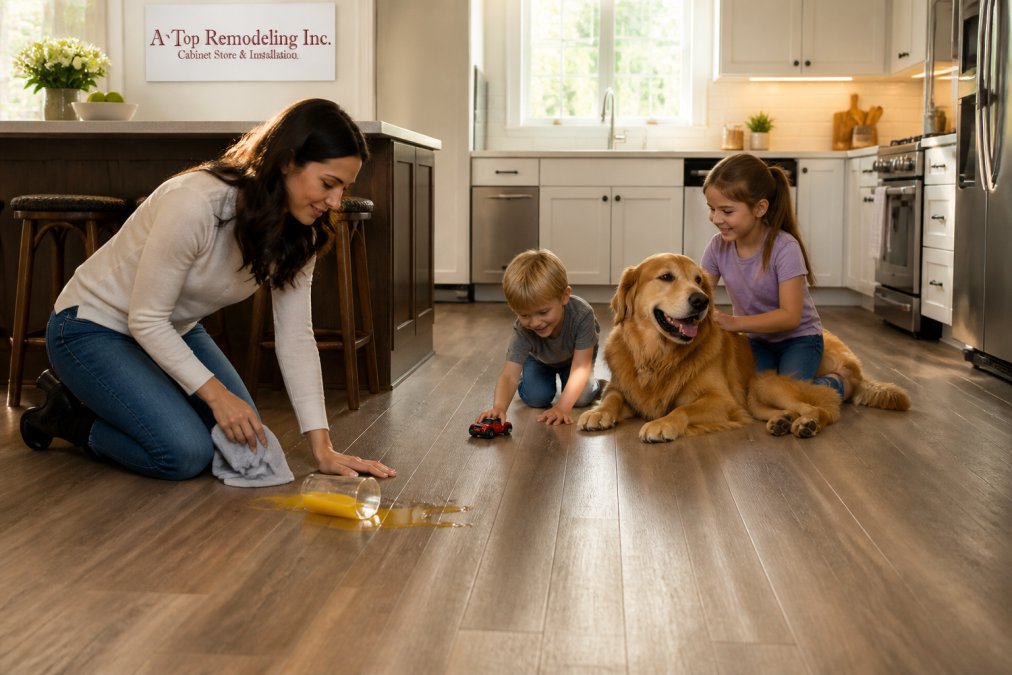
The rigid-core construction handles impact far better than older vinyl sheets, and modern printing makes the wood grain genuinely convincing. For a family that cooks nightly, that combination is hard to beat.
Pros and Cons of LVP
Pros:
- Fully waterproof, so spills and pet accidents are non-events
- Easy to clean with standard household products
- Comfortable and warmer underfoot than tile
Cons:
- Cannot be refinished once the wear layer is damaged
- Lower-end products can look flat and plasticky up close
2. Porcelain Tile: Unbeatable Durability for High-Traffic Kitchens
Porcelain tile is the most durable option on this list, and it is the right pick when a kitchen sees constant use. It absorbs almost no water, shrugs off heat and heavy foot traffic, and comes in large-format sizes that cut grout lines dramatically.
Installation cost depends on layout complexity.

The tradeoff is comfort. Porcelain is cold and hard underfoot, which matters if you stand at the stove for long stretches. Radiant heating solves the chill, and anti-fatigue mats handle the hardness.
Pros and Cons of Porcelain Tile
Pros:
- Extremely long lifespan with minimal wear
- Does not swell or buckle in humid conditions
- Works with underfloor radiant heating
Cons:
- Cold and hard underfoot without mats or heating
- Grout lines need regular cleaning to stay bright
3. Engineered Hardwood: Warmth Without the Warp
Engineered hardwood gives you the look and warmth of real timber with a stability that solid hardwood cannot match in a kitchen. Its cross-ply core resists the expansion and contraction that ruins solid wood near sinks and dishwashers.
Where it falls short is water. Engineered hardwood tolerates humidity swings, but standing water left on the surface can still stain or damage the veneer. Wipe up spills promptly and it will serve you well for decades.
Pros and Cons of Engineered Hardwood
Pros:
- Adds measurable resale value to the home
- More stable than solid hardwood in fluctuating humidity
- Real wood veneer looks authentic
Cons:
- More vulnerable to water damage than vinyl or tile
- Higher upfront cost
4. Ceramic Tile: Budget-Friendly and Versatile
Ceramic tile delivers dependable water resistance. It resists stains, cleans easily, and comes in a huge range of colors and patterns.
The catch is density. Ceramic is less dense than porcelain, so a dropped cast-iron pan can crack it. For a busy kitchen, that risk is real.
Pros and Cons of Ceramic Tile
Pros:
- Very affordable compared to porcelain or stone
- Excellent for high-traffic zones
- Easy to sanitize
Cons:
- More prone to cracking under heavy impact
- Grout maintenance is required
5. Strand-Woven Bamboo: Sustainable and Scratch-Resistant
Strand-woven bamboo is a compressed bamboo product with a hardness rating that often exceeds traditional oak. It is a strong choice for eco-conscious homeowners who still want a hard, dent-resistant surface.
Quality varies widely by manufacturer, so sourcing matters more here than with most materials.
Pros and Cons of Strand-Woven Bamboo
Pros:
- Exceptional durability for a natural material
- Sustainable and rapidly renewable
- Available in multiple stained finishes
Cons:
- Quality varies significantly by manufacturer
- Not fully waterproof
6. Laminate Flooring: The Budget-Friendly DIY Option
Laminate is a cost-effective path to a fresh kitchen floor. Its click-lock system makes it a realistic weekend project for a confident DIYer.
Water is the weak point. Only choose laminate explicitly labeled water-resistant or waterproof for a kitchen, and even then, standing water left overnight can swell the core.
Pros and Cons of Laminate Flooring
Pros:
- Very cost-effective
- Simple installation process
- Realistic wood and stone visuals
Cons:
- Damaged by standing water unless labeled waterproof
- Cannot be refinished
7. Natural Stone: Luxury That Lasts a Lifetime
Natural stone such as travertine or slate brings one-of-a-kind character that no synthetic floor can copy. Every tile is unique, and the material is heavy, durable, and genuinely long-lasting.
Installation can be more demanding and may include the cost of sealing.
The maintenance is the honest drawback. Natural stone is porous and needs regular sealing to prevent staining, and acidic spills like lemon juice or vinegar can etch the surface if left sitting.
Pros and Cons of Natural Stone
Pros:
- Increases home value significantly
- Extremely durable
- Unique aesthetic in every tile
Cons:
- Requires regular sealing to prevent staining
- Porous surface is vulnerable to acidic spills
8. Hybrid Resilient Flooring: The Best of Both Worlds
Hybrid resilient flooring combines the scratch resistance of laminate with the waterproof core of vinyl, which makes it a strong fit for busy homes that want both.
Availability is thinner than standard LVP, so selection can be limited depending on your supplier.
Pros and Cons of Hybrid Resilient Flooring
Pros:
- Combines durability with realistic textures
- Highly resistant to household accidents
- Stable across temperature changes
Cons:
- Limited availability compared to standard LVP
- Higher price point than basic vinyl
9. Rigid-Core Vinyl: Maximum Stability for Humid Kitchens
Rigid-core vinyl uses a stone-plastic composite core that barely moves with humidity, making it the most dimensionally stable option here. It can also go over slightly imperfect subfloors, which saves money on prep.
Pros and Cons of Rigid-Core Vinyl
Pros:
- Excellent stability in extreme environments
- Very low maintenance
- Can be installed over minor subfloor imperfections
Cons:
- Can feel harder underfoot than traditional LVP
- Requires precise subfloor preparation
Matching the Right Floor to Your Busy Kitchen
The right choice depends on what your household actually does to a floor. A family with three dogs and a toddler should start with luxury vinyl plank or rigid-core vinyl. A home that entertains and wants a statement surface should look hard at porcelain or natural stone.
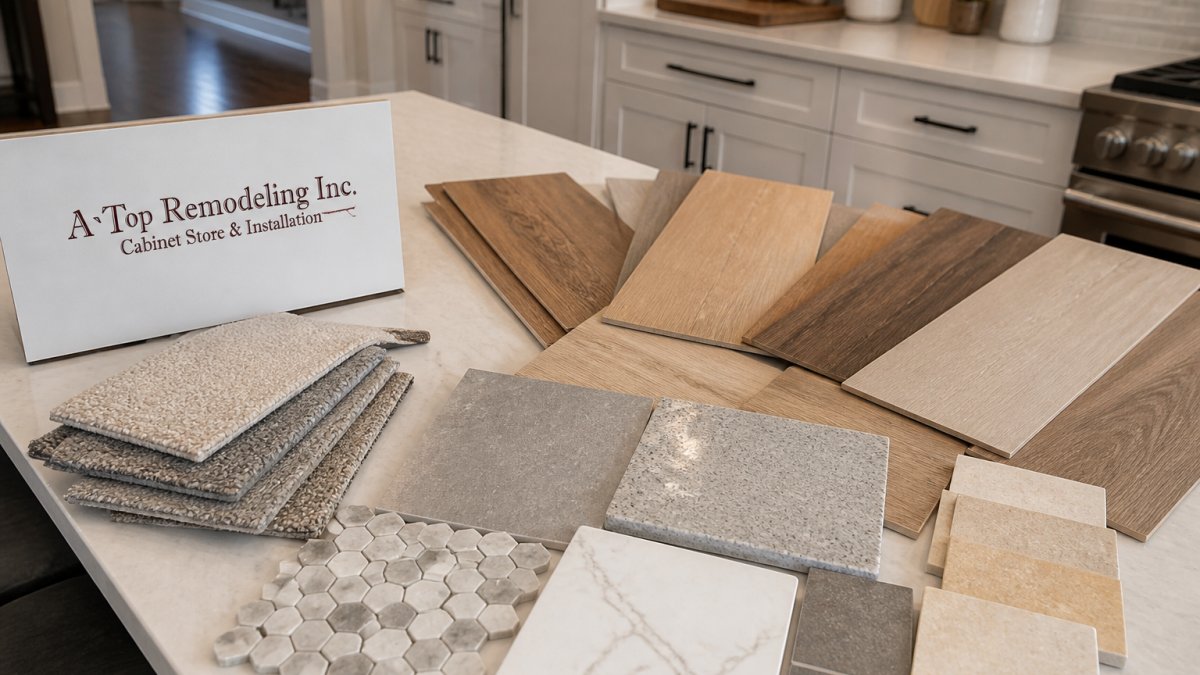
If you would rather not guess, A-Top Remodeling Inc. brings samples to your home during a free measuring consultation, so you can see each kitchen flooring option under your own lighting before committing. That matters more than any showroom display.
For homeowners searching for kitchen flooring installation near me in Plainfield, working with one team that handles cabinets, flooring, and finishing keeps the schedule tight and the budget predictable. A-Top Remodeling Inc. has delivered complete kitchen transformations across the Chicago suburbs for over 30 years, including wheelchair-friendly layouts designed to look like any other beautiful kitchen.
Picking a kitchen floor that survives a busy household is really a question of matching material to lifestyle, and getting that match wrong is expensive to undo. A-Top Remodeling Inc. handles the whole project, from free in-home measuring with samples to custom design and precision installation, so you choose with confidence instead of guesswork. With 30+ years of experience and on-time and on-budget delivery, the team makes the decision simple. Get your free consultation with A-Top Remodeling Inc. and start your kitchen transformation today.
Frequently Asked Questions
What is the most durable kitchen flooring for a busy household?
Porcelain tile and rigid-core vinyl (SPC) are the most durable options for busy homes. Porcelain resists scratches, heat, and moisture, while rigid-core vinyl handles heavy foot traffic and resists dents. Both stand up to kids, pets, and daily cooking. LVP is also highly durable and waterproof, but porcelain and rigid-core vinyl offer superior impact resistance and longevity in high-traffic kitchens.
Is luxury vinyl plank good for high-traffic kitchens?
Yes, luxury vinyl plank (LVP) is an excellent choice for high-traffic kitchens. Its wear layer resists scratches and dents, and its waterproof core handles spills and pet accidents. LVP is easy to clean with a damp mop and doesn't require sealing. However, it cannot be refinished, so deep gouges may require board replacement. For best results, choose a thick wear layer (20 mil or higher) for maximum durability.
How do I choose kitchen flooring that is easy to clean?
Look for smooth, non-porous surfaces like luxury vinyl plank, porcelain tile, or rigid-core vinyl. These resist stains and wipe clean with a damp cloth or mop. Avoid natural stone and unglazed ceramic, which require sealing and can trap dirt in their pores. Grout lines on tile need regular scrubbing, so consider large-format tiles to minimize grout. LVP and rigid-core vinyl have no grout and are the easiest to maintain.
What are the pros and cons of hardwood vs. tile in a kitchen?
Hardwood (including engineered) offers warmth and resale value but is susceptible to water damage and requires careful maintenance. Tile (porcelain or ceramic) is waterproof, scratch-resistant, and easy to clean, but it feels hard and cold underfoot and can crack if heavy objects are dropped. For busy homes with spills and pets, tile is more practical; engineered hardwood works if you're diligent about wiping up water quickly.
How much does professional kitchen floor installation cost in Plainfield, IL?
Kitchen flooring installation cost in Plainfield, IL depends on the material, square footage, subfloor condition, and labor. For an accurate quote, contact a local remodeling professional like A-Top Remodeling Inc. for a free measuring consultation with samples brought to your home.